Dead Cat Bounce? Oil Prices After King Abdullah's Death

  • Subscribe to our RSS feed.
  • Twitter
  • StumbleUpon
  • Reddit
  • Facebook
  • Digg

Monday, 14 July 2014

JP Morgan: How FIrms Can Profit From Using RMB

Posted on 17:30 by Vicky daru
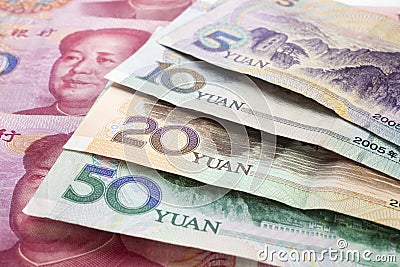
It's true that Chinese currency unit the renminbi (RMB) AKA the yuan has been devaluing these past few months in tandem with slowing PRC growth. Aside from the most optimistic of speculators, did anyone really think that the currency would steadily rise forever? Yet, the global adoption of the currency continues apace as China experiments with greater liberalization of its current account. Among the early beneficiaries of this process are multinationals who've already benefited much from China opening up to the world that can now take advantage of PRC currency reforms:
As China's internationalization of the RMB and its associated deregulation continue to advance, a variety of new opportunities for both MNCs and local corporations are emerging. One recent example is the State Administration of Foreign Exchange's (SAFE) April 2014 release of a Circular on supporting MNCs’ centralized foreign exchange management. The circular aims to further simplify MNCs’ trading and investment processes, supports MNCs’ centralized treasury management across domestic and overseas entities, and continues to explore capital account convertibility.

Whilst the new rules are only applicable to eligible MNCs, they allow corporations to convert foreign exchange (FX) freely for Foreign Direct Investments (FDI) and foreign debt funding. This gives corporations important, additional flexibility that will assist them in managing their FX exposure effectively.
JP Morgan adds further implications of these changes for MNCs. First, no longer will payments and transactions handling need to be separated into a "mainland China-only" entity but these can be streamlined into firm-wide (international) backroom operations. Second, and following from the first, operations can thus be centralized for documentation purposes:

Plugging China Into Regional/Global Operations

Previously, China has been somewhat isolated by regulatory hurdles from corporations' regional and global operations. While it has been possible to perform treasury management within the country, linking that to regional or global management has not been easy. However, de-regulation is gradually remedying this situation, so it is now possible to connect China with operations elsewhere in a variety of areas. Whilst some of these are as yet only fully connectible as part of pilot schemes (such as those operating in the Shanghai Free-Trade Zone) and have not yet been rolled out nationwide, they
currently include areas such as liquidity management, netting and payables/receivables on behalf of.

Seizing the Centralization Edge

A considerable number of Chinese treasury-related operations have formerly been decentralized in terms of management. This has often been due to significant physical documentation requirements, as in the case of cross-border flows. The net result was that many financial processes ended up having to be conducted on an entity by entity basis, resulting in appreciable duplication, non-standardization and additional costs.

However, as Chinese regulatory bodies continue to simplify or remove documentary requirements, companies have the opportunity to standardize and centralize their Chinese treasury operations. Ultimately, many activities that were replicated across multiple business units in China can now be standardized in accordance with any regional or global processes which a company may have established. They can then be run from a Shared Service Centre, either within China or elsewhere. Apart from economies of scale, standardization and centralization also serve to reduce the operational risks associated with individual business entities developing and running their own financial processes.
The third and most intriguing possibility is of reducing foreign exchange risks emanating from moving RMB back and forth between onshore and offshore accounts: 

Making China FX Risks History

RMB internationalization and the reduction of regulation in China also give corporations the opportunity to minimize FX risks. In the past, cross-border flows with China were foreign currency-denominated, typically U.S. Dollars (USD). As a result, even though a domestic business would have RMB as its functional currency, any incoming USD investment had to be converted to RMB and vice versa for outgoing flows, such as dividends or trade payments. This resulted in FX risk exposure and associated costs that corporate treasuries had to handle. However, the internationalization of the RMB and the shrinking of associated regulatory hurdles mean that it is now possible to minimize FX exposures while also benefiting from increased currency mobility.

For example, a corporation might opt to include surplus onshore [read: mainland-issued] RMB in its global liquidity pool. Should it subsequently require RMB onshore (perhaps to fund a new onshore business unit or to make an acquisition), the funds can simply be remitted from the global liquidity pool back onshore. These two transactions would previously have incurred two FX dealing spreads (from RMB to USD and back again) plus administrative overheads. It will not take many such transactions under the new regime to accrue a very substantial saving over the previous regulatory requirements.
Make no mistake: the China opening up the West story still has a few more chapters waiting to be written.
Email ThisBlogThis!Share to XShare to Facebook
Posted in China, Currencies | No comments
Newer Post Older Post Home

0 comments:

Post a Comment

Subscribe to: Post Comments (Atom)

Popular Posts

  • Detours to Linking HK, Shanghai Stock Exchanges
    The Hong Kong Stock Exchange has yet to be, ah, Shanghaied The recent turmoil over student protesters jamming the normal course of traffic (...
  • National Debt That's 245% of GDP? No Worries, Japan
    Relaaaaax; it's not as bad as it looks for Japan? Economics Professor Masazumi Wakatabe at Waseda University was prompted to write comme...
  • Professional Stand-In-Liners, a Venezuelan Profession
    "Everyday I dream dipeys don't run out once I finally get into the store." To be sure, professional waiters-in-line are not u...
  • Russia Fun: Ruling on $100B Yukos Expropriation Claim
    Those were the days--and some hope to bring them back. Five years later, we are about to hear the decision on Russia's liabilities from ...
  • East / Southeast Asia's Demographic Bifurcation
    There's are always interesting demographic discussions about the "West and the Rest," but there are also interesting demograph...
  • Dive Contest: Russian Ruble v Ukrainian Hryvnia
    Only the bravest would take a position on the RUB/UAH exchange rate. In the Summer Olympics, they have a popular and quite watchable event c...
  • China Has Exhausted Its Goodwill in SE Asia
    Call it "Escape From the Killing Fields 2": China sending ships to repatriate its workers from Vietnam as anti-PRC riots there re...
  • A Bad Idea: Flying Passenger Jets Over Ukraine
    I am greatly saddened by the loss of Malaysia Airlines MH17 over the airspace of Ukraine. I have been following the disaster since it was re...
  • Sands' Sheldon Anderson 1, Online Gambling Stateside 0
    The US nanny state and a casino mogul combine to frustrate online gambling Stateside. For a long time, I have covered attempts to regulate I...
  • Egypt's World Beggary Tour 2013 Goes On
    The rise and millennia-long fall of the Egyptian Empire continues apace. From the giddy heights of empire catalogued in the Bible to its pre...

Categories

  • Aerospace
  • Africa
  • Agriculture
  • Americana
  • Anti-Globalization
  • APEC
  • Caribbean
  • Cars
  • Casino Capitalism
  • Cheneynomics
  • China
  • Commodities
  • Corruption
  • Credit Crisis
  • CSR
  • Culture
  • Currencies
  • Demography
  • Development
  • Economic Diplomacy
  • Economic History
  • Education
  • Egypt
  • Energy
  • Entertainment
  • Environment
  • Europe
  • FDI
  • Gambling
  • Gender Equality
  • Governance
  • Health
  • Hegemony
  • IMF
  • India
  • Innovation
  • Intellectual Property
  • Internet Governance
  • Japan
  • Labor
  • Latin America
  • Litigation
  • Marketing
  • Media
  • Microfinance
  • Middle East
  • Migration
  • Mining
  • MNCs
  • Multiculturalism
  • Neoliberalism
  • Nonsense
  • Outsourcing
  • Paris Club
  • Religion
  • Russia
  • Sanctions
  • Security
  • Service Announcement
  • Socialism
  • Soft Power
  • South Asia
  • South Korea
  • Southeast Asia
  • Sports
  • Supply Chain
  • Technology
  • Trade
  • Travel
  • Underground Economy
  • United Nations
  • World Bank

Blog Archive

  • ►  2015 (16)
    • ►  January (16)
  • ▼  2014 (295)
    • ►  December (21)
    • ►  November (27)
    • ►  October (27)
    • ►  September (24)
    • ►  August (24)
    • ▼  July (28)
      • Can Malaysia Airlines Be Rebranded?
      • Marketing the Unmarketable: Israel's Soft Power
      • Is Russia on Argentina's Credit Highway to Hell?
      • In Memoriam: Japan's Export Champion Days
      • 'Libertarian Hacking' is Not an Oxymoron
      • Diversification, or Macau Can't Live on Gambling A...
      • Russia Fun: Ruling on $100B Yukos Expropriation Claim
      • Sisi's No Sissy: Ending Egypt's Unsustainable Subs...
      • Adios Sochi Grand Prix 2014, Russia World Cup 2018?
      • Bhagwati: PRC's Corruption 'Developmental', India'...
      • MNCs and Setting Cambodia's Minimum Wage
      • A Bad Idea: Flying Passenger Jets Over Ukraine
      • Diversifying Zambia's Copper-Based Economy
      • New World Order? BRICS "New Development Bank"
      • JP Morgan: How FIrms Can Profit From Using RMB
      • Tracing Tax Avoidance, Chicken Chain Style
      • World Cup of Default: Argentina at T-Minus 19
      • Referee Selection Politics: Germany v Argentina
      • Improving Governance, Secularizing Vatican Finances
      • When EU Membership's a Bust: Bulgarian Bank Run
      • Antitrust Biggies: Rockefeller 1911, Carlos Slim 2014
      • Tech Frontliners: Bangladesh's Traveling Infoladies
      • Does Gazprom Fund European Anti-Fracking Activists?
      • Overcrowded Singapore Spills Into Indonesia, Malaysia
      • Modern World Systems: Miami & Latin America
      • Social Media is a Wasteland, Corporate Edition
      • US Can Learn From Its Football Vanquisher, Belgium
      • PRC's Tech Jihad Vs. 'IOE': IBM, Oracle, EMC
    • ►  June (27)
    • ►  May (27)
    • ►  April (29)
    • ►  March (23)
    • ►  February (18)
    • ►  January (20)
  • ►  2013 (183)
    • ►  December (15)
    • ►  November (17)
    • ►  October (19)
    • ►  September (21)
    • ►  August (14)
    • ►  July (17)
    • ►  June (16)
    • ►  May (8)
    • ►  April (9)
    • ►  March (13)
    • ►  February (14)
    • ►  January (20)
  • ►  2012 (4)
    • ►  December (4)
Powered by Blogger.

About Me

Vicky daru
View my complete profile